Skip to content

The Builders

People who started the towns, mills, shops, schools, and churches of this county. Living or long dead, no distinction.

Shipshewana

Davistown and Summeytown

Shipshewana was two towns before it was one, with a road between them and a rivalry across it. Neither county history mentions this. It is on a marker at the corner of Main and Morton, put up by both families together in the year 2000.
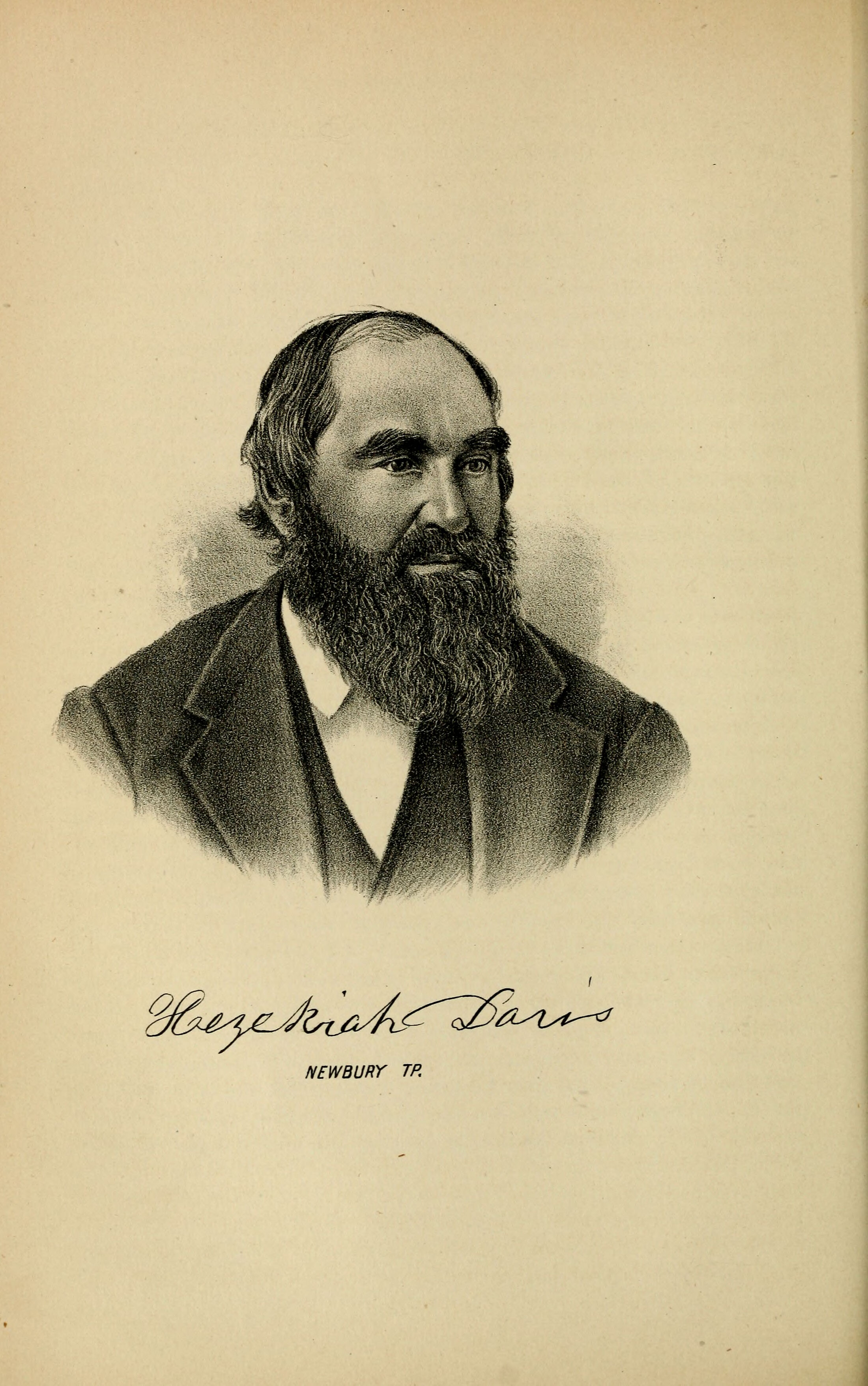
An 1882 lithograph bust portrait of a man in late middle age, turned three-quarters to his right and looking at the viewer. High balding forehead, hair long over the ears, a full dark beard reaching his chest with the moustache trimmed clear of the lip. Dark coat with a wide lapel over a white collar and dark neckcloth. Beneath the portrait an engraved signature reading Hezekiah Davis, and under it Newbury Tp.

Counties of LaGrange and Noble, Indiana, F.A. Battey & Co., 1882, via the Internet Archive.

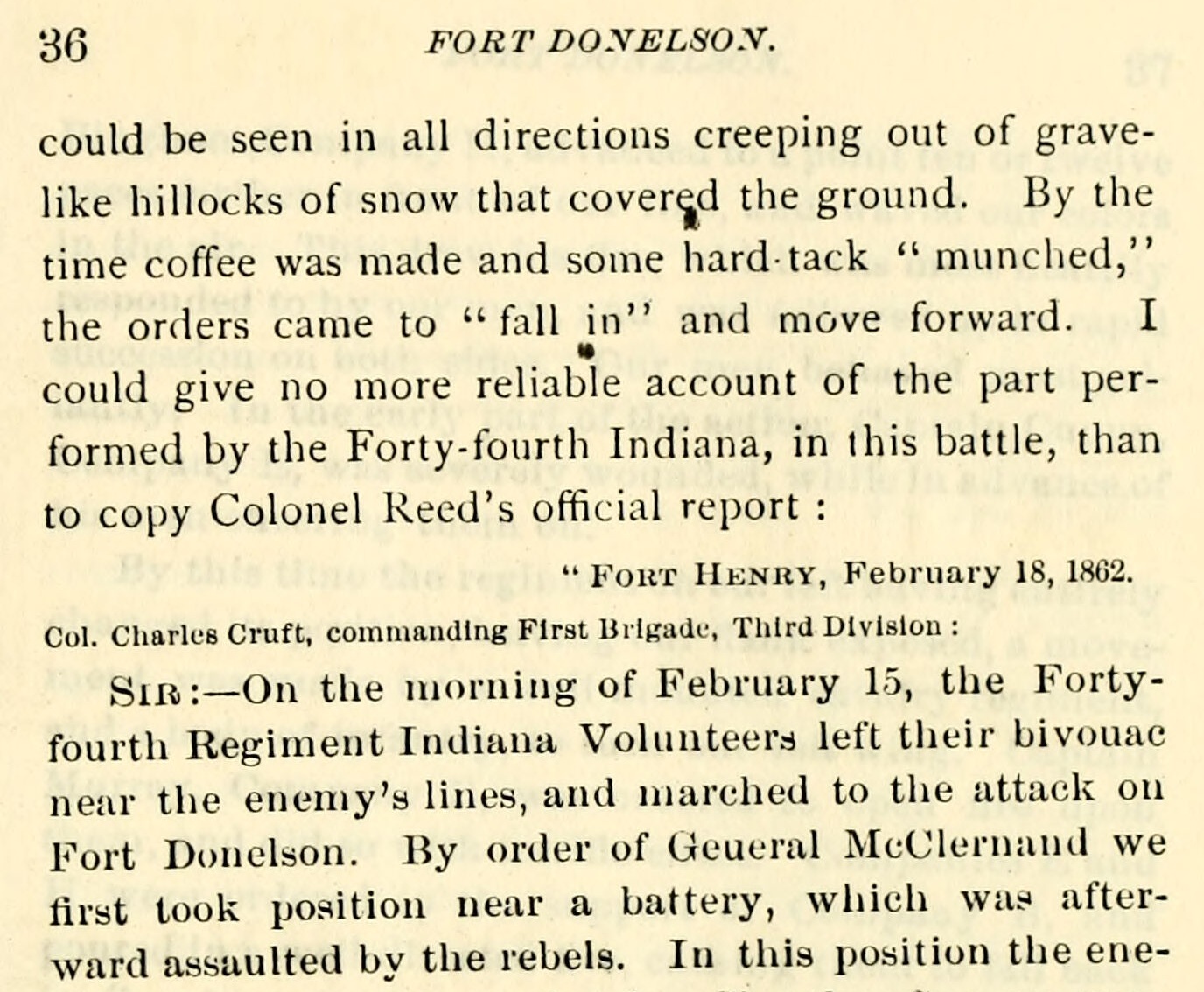
  • A page of a printed book, page 36, with the running head FORT DONELSON. Six lines of text end with the sentence, I could give no more reliable account of the part performed by the Forty-fourth Indiana, in this battle, than to copy Colonel Reed's official report, followed by a colon. Beneath it, set smaller and to the right, a dateline reading FORT HENRY, February 18, 1862. Below that a line of bold text, Col. Charles Cruft, commanding First Brigade, Third Division, and then the letter itself beginning SIR, on the morning of February 15, the Forty-fourth Regiment Indiana Volunteers left their bivouac near the enemy's lines. The letter runs on and the frame cuts it mid-word at the foot. Faint printing from the following page shows through the paper behind the type.

    LaGrange

    No more reliable account

    Dr. John H. Rerick signed more of the 1882 county history than any other man in it, and he owned the newspaper in the town where it was gathered. When his own regiment's history reached two of its battles, he stopped writing and copied the commanding officer's report.

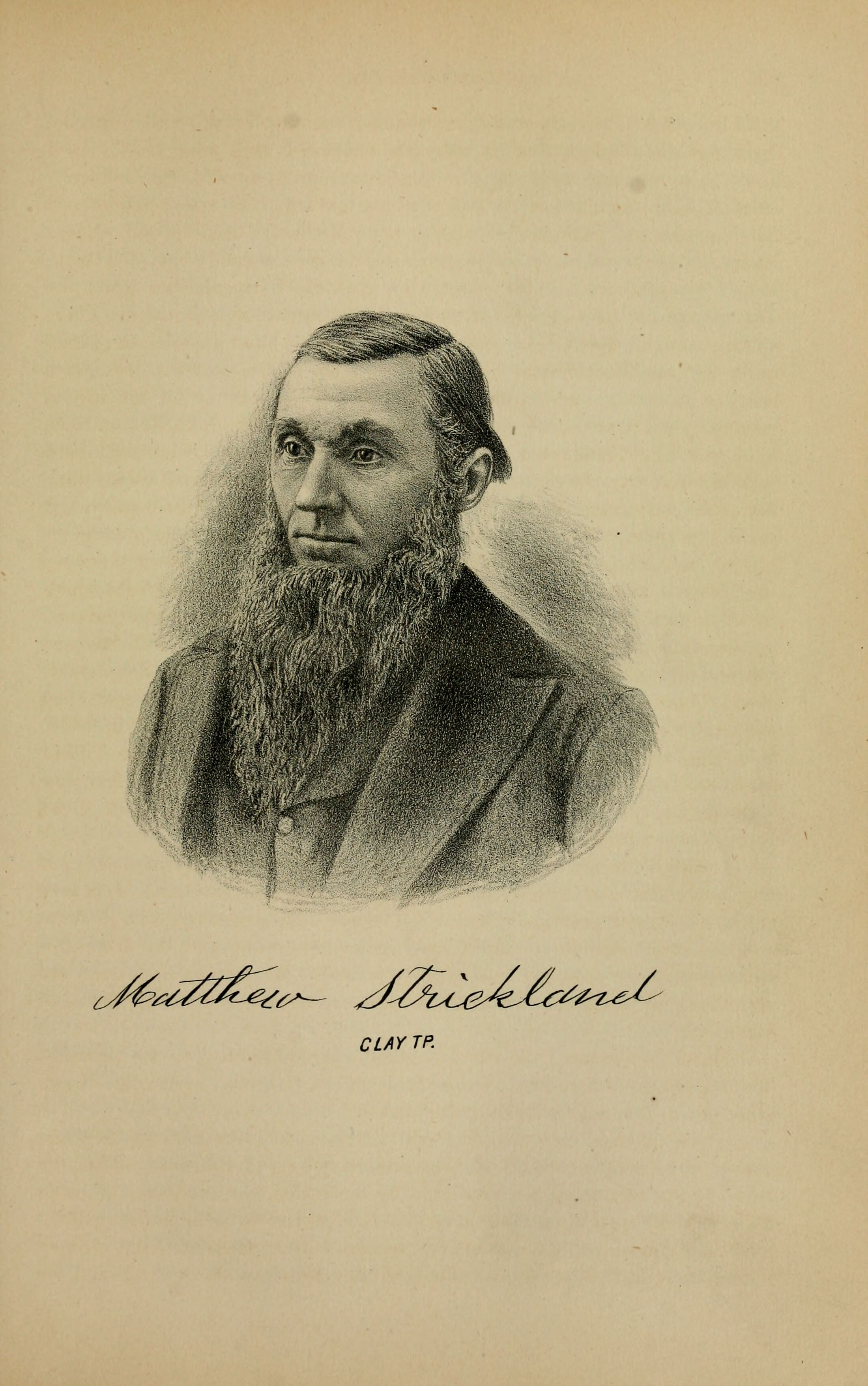
  • An 1882 lithograph bust portrait of a man turned three-quarters to his right and looking at the viewer. A lean long face with high cheekbones and a high forehead, dark hair combed flat back and long enough to cover the tops of his ears, no moustache, and a very long full beard falling well down his chest in tight crimped waves. A buttoned dark coat with a broad lapel over a plain dark shirt, with nothing at the throat. Beneath the portrait an engraved signature reading Matthew Strickland, and under it, in small spaced capitals, the words CLAY TP.

    Clay Township

    Still bearing excellent fruit

    Clay Township never had a town, a village, a store or a tavern, and the Gazette has no piece about it for that reason. One man from Clay has his face in the county history. This is everything the record says about him.

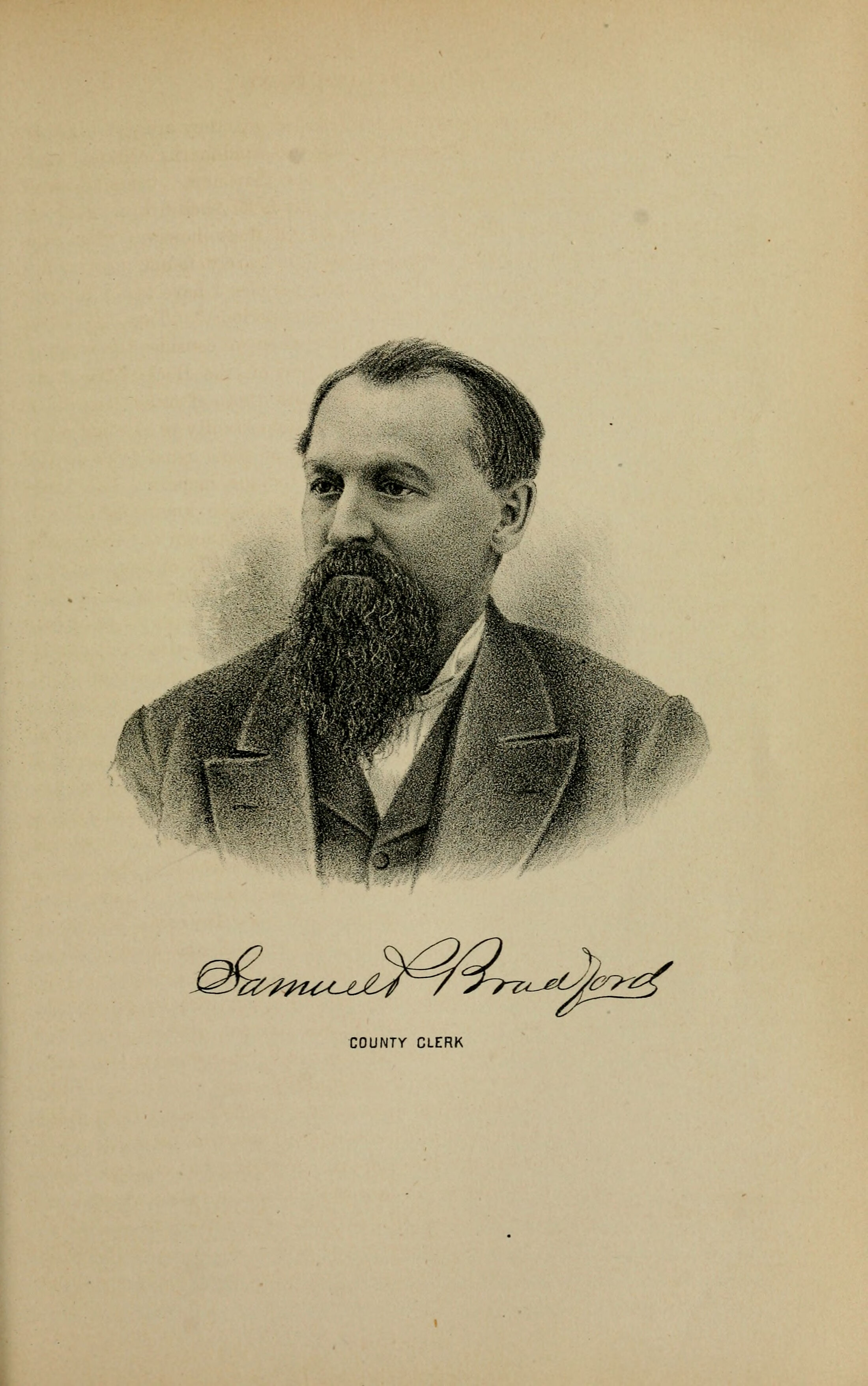
  • An 1882 lithograph bust portrait of a man turned three-quarters to his right and looking at the viewer. Dark hair combed back off a high forehead, no moustache, and a long full beard worn from the jaw and cheeks leaving the upper lip bare. A dark coat with a notched lapel and a welt pocket over a matching waistcoat and a white shirt. Beneath the portrait an engraved signature reading Samuel P Bradford, and under it, in small spaced capitals, the words COUNTY CLERK.

    Brighton

    The non-resistant's son

    Samuel Bradford left his church over anti-slavery and non-resistance and founded a religious commune. His son was twelve when he died. Nineteen years later that son enlisted as a private, and eleven years after that he built the county courthouse.

Support the Gazette

Nothing on this site is behind a paywall and nothing on it is sponsored. If it has been worth something to you, there are three ways to give something back, and only one of them involves money.

Support the Gazette